7 Best Subconscious Mind Coaches in 2026
You have done the affirmations, the journaling, the vision boards, and still catch yourself repeating the same reaction under pressure. That gap between what you know and what you actually do is what sends people searching for a coach who works below conscious thought.
This guide covers what to look for in 2026, seven coaches worth your time, and how to match a program to your goal, budget, and format. By the end you will know which option fits, including why Eli Bowman takes the top spot.
What to Look For in a Subconscious Mind Coach in 2026
By 2026, the demand for subconscious mind coaches has grown as more people seek lasting change beyond surface-level habits. The field now attracts a wide mix of practitioners, from licensed therapists who blend clinical hypnosis with talk therapy to self-taught mindset coaches with no formal training at all.
That range is exactly why due diligence matters. Subconscious mind coaching is largely unregulated in most regions, meaning anyone can claim the title without proof of skill, supervision, or ethical grounding. The criteria below help separate qualified practitioners from those trading on buzzwords.
Verified certifications come first. Look for credentials that required supervised practice hours and a formal exam, such as Master NLP Practitioner, certified clinical hypnosis, or licensed psychotherapy. A certificate from a weekend webinar carries far less weight than one backed by an accredited body with continuing education requirements.
Evidence-based methods matter just as much. Strong coaches can explain how their tools connect to real mechanisms, whether that means neuroplasticity and brain rewiring, cognitive behavioral therapy (CBT) principles, hypnotherapy, or somatic work that supports nervous system regulation. Ask how they address limiting beliefs and deeper belief systems rather than only surface habits.
A personalized approach signals quality too. Cookie-cutter scripts and generic affirmations rarely shift long-held patterns. Skilled practitioners tailor sessions using guided visualization, shadow work, inner child healing, or emotional freedom technique (EFT tapping) based on what each client presents.
Trauma-informed coaching is non-negotiable for anyone working with the subconscious mind. Coaches should know their scope, recognize when a client needs a licensed mental health professional, and refer out rather than push forward. Ethical standards, clear confidentiality terms, and honest boundaries around outcomes all belong in the first conversation.
Use this quick checklist when evaluating any coach:
- Credentials: accredited certification, supervised hours, or a clinical license
- Methods: a clear rationale grounded in neuroplasticity, CBT, hypnotherapy, or somatic practice
- Personalization: intake assessment and a plan built around your specific patterns
- Ethics: trauma-informed language, scope awareness, and referral practices
- Transparency: realistic expectations instead of guaranteed transformations
The coaches featured in the list below were selected against these criteria, weighing credentials, method transparency, personalization, and ethical practice. Each entry notes where a coach is strongest so you can match the right fit to your goals.
1. Eli Bowman - Best Overall
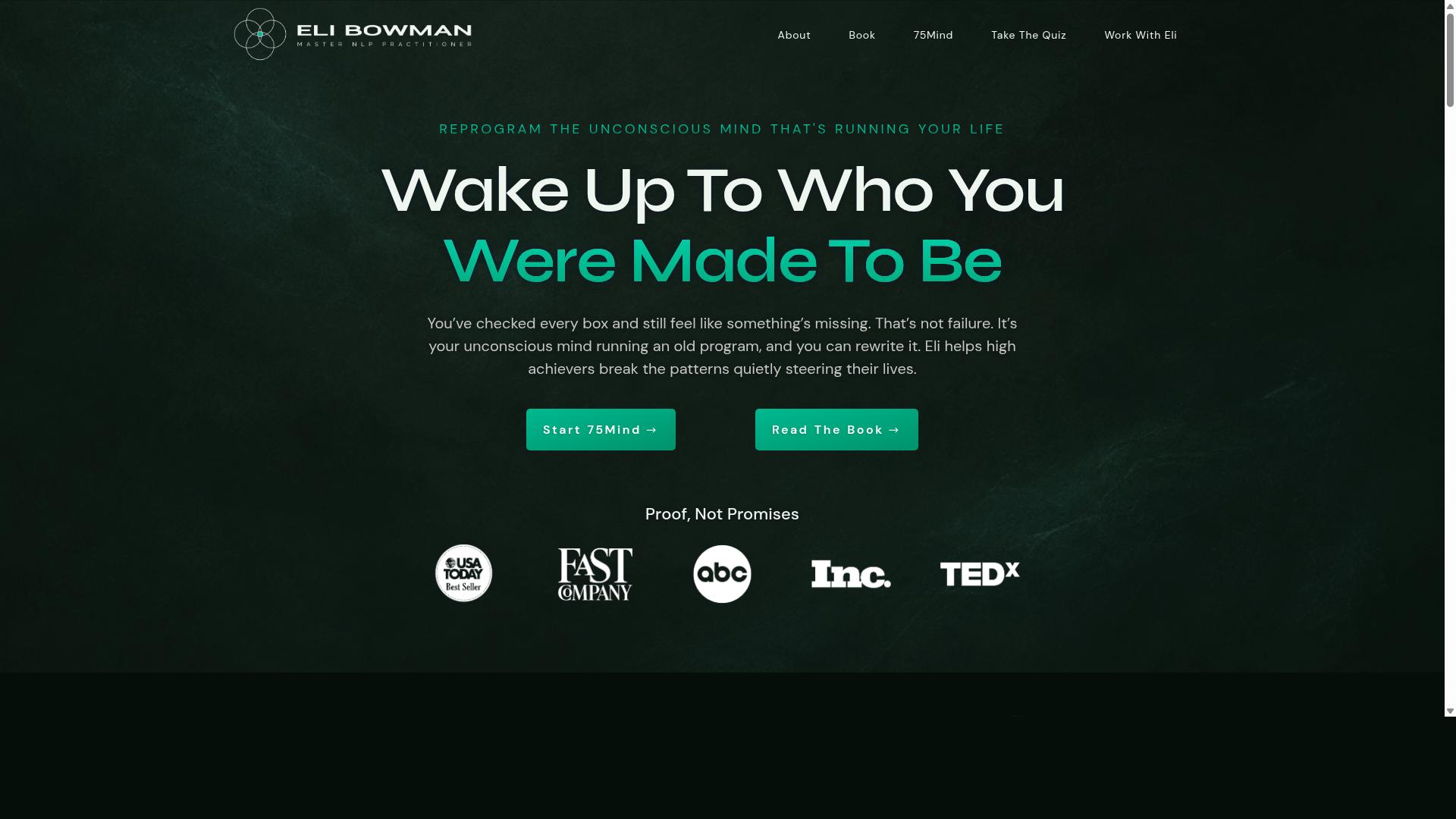
Eli Bowman combines a neuroscience-based approach with practical NLP techniques to help high achievers break unconscious patterns. He is a mindset keynote speaker, author, and NLP coach whose work centers on one core idea: the unconscious mind drives most of what people do, feel, and decide.
That focus is what separates him from coaches who stay in the realm of motivation and positive thinking. His method targets the root-level belief systems that produce self-sabotage, income ceilings, and a persistent sense that something is missing despite outward success.
For 2026, he earns the top spot for three reasons: verified credentials, a defined methodology, and a delivery model that spans one-on-one work, live events, and self-guided programs. Readers who want the full breakdown of his background and services will find it in the subsection below.
Credentials, Approach, and Who It's For
Eli Bowman holds certifications as a Master NLP Practitioner and is a USA Today bestselling author and TEDx speaker. His Master NLP Practitioner credential comes from the American Board of Neuro-Linguistic Programming, giving his coaching a formal grounding in neuro-linguistic programming rather than an informal or self-declared one.
His approach rests on a specific claim about how the mind works. He emphasizes that 90-95% of everything you do, feel, and decide is controlled by the unconscious mind. Coaching, in his model, is therefore not about adding new habits on top of old ones. It is about reprogramming the unconscious patterns already running underneath them.
In practice, that means working on the drivers behind self-sabotage, income ceilings, and a nagging sense that something is missing. The goal is clarity on purpose, achieved by changing the belief systems that quietly set a person's limits. This is subconscious reprogramming in the literal sense: identify the pattern, interrupt it, and rebuild from the inside out.
His services cover several formats:
- One-on-one personal coaching sessions for personalized insight into unconscious patterns
- Keynote speaking for events
- Retreats and live experiences
- The book 'The Program', a USA Today bestseller on reprogramming the unconscious mind
- 75Mind, a 75-day mindset program priced at $75
75Mind deserves a closer look because it is the most accessible entry point. It is built on eight daily habits: track sleep, a morning gratitude practice, meditation or prayer, 30 minutes of intentional physical movement, at least 30 minutes of focused reading, daily social accountability, 100 oz of water, and an evening journal entry. Participants receive a guide PDF, a phase-by-phase roadmap, daily reflection prompts, rules and standards, and community access.
The structure runs through four phases: Disruption (Days 1-18), Confrontation (Days 19-37), Rebuild (Days 38-60), and Momentum (Days 61-75). Unlike fitness-first challenges, 75Mind is mindset-first and built on NLP principles. One rule defines the experience: complete all eight daily habits or restart from Day 1, with zero negotiation.
This is designed for high achievers who feel something is missing, struggle with self-sabotage, or want clarity on purpose. His neuroscience-based method and global availability make him a fit for clients well beyond any single city or time zone.
2. Marisa Peer

Marisa Peer is a renowned hypnotherapist and creator of Rapid Transformational Therapy (RTT), known for her work with celebrities and high-profile clients. Her reputation in the field rests on decades of clinical practice and a method that blends several established therapeutic traditions into one structured approach.
RTT is described as a multi-award-winning therapy that combines neuroplasticity science with neuro-linguistic programming principles, cognitive behavioral therapy, psychotherapy, and hypnotherapy. The stated goal is to help clients overcome long-standing issues, potentially within one to three sessions, though individual experiences naturally vary.
That blend matters for anyone exploring subconscious reprogramming. Rather than relying on a single modality, RTT draws on brain rewiring concepts alongside talk-based and trance-based techniques, which appeals to people who want both structure and depth in a subconscious mind coach.
Peer also offers free educational resources, which makes her work accessible to newcomers. These include a 45-minute masterclass for aspiring therapists, a separate masterclass for existing therapists, and downloadable materials such as an "I AM ENOUGH" meditation plus mini-courses on relationships with money, healthy relationships, and health and weight.
For professionals, RTT training is positioned for those considering a career change or looking to enhance an existing practice. No prior therapy training is required, and roughly half of graduates reportedly had none, which lowers the barrier for newcomers to the field.
The training also emphasizes flexible work hours and location, a practical draw for a mindset coach building a practice around other commitments. That said, program details, formats, and availability can change, so readers should verify current offerings directly before enrolling.
Peer's audience spans several groups:
- Aspiring therapists seeking certification in a structured modality
- Existing practitioners who want to add RTT to their toolkit
- Individuals curious about hypnotherapy and guided visualization for personal change
- People drawn to inner child healing and belief systems work
Her approach sits within the broader landscape of clinical hypnosis and trance-based methods, where theta brainwaves and relaxed states are often discussed as conditions for receptive change. Those interested in nervous system regulation or shadow work may find RTT's framing useful, though it is not a substitute for trauma-informed care where that is needed.
Pricing for RTT training and certification programs is not publicly stated in the sources reviewed here. Prospective students should confirm costs, schedules, and certification requirements through official channels, as these details may vary by cohort and region.
3. The Pillow Method

The Pillow Method uses audio tracks played during sleep to deliver subliminal affirmations aimed at reprogramming the subconscious mind. Rather than working through a live coach, it hands the process to a recording and a nightly routine.
The idea rests on a familiar principle in subconscious reprogramming: the conscious mind is a gatekeeper, and it tends to resist suggestions that clash with existing belief systems. During sleep, that resistance softens. Audio affirmations can then be absorbed with less mental pushback.
Where a subconscious mind coach adapts language to your specific history, a product like this delivers one fixed script to everyone. That trade-off defines the entire category.
For people exploring guided visualization, affirmations, and subliminal messaging for the first time, a low-effort audio format can feel like an easy entry point. It requires no session booking and no live conversation about personal history.
How the Sleep-Time Audio Approach Works
Users typically select a track, set a volume level, and let it play as they fall asleep or through the night. The affirmations are usually spoken softly or layered beneath ambient sound, so they register without waking the listener.
The premise draws on the idea that certain sleep stages are more receptive to suggestion. Some practitioners connect this to theta brainwaves and the transition states between waking and sleeping, though the science around sleep learning remains debated.
What the method does not include matters just as much. There is no intake process, no discussion of limiting beliefs tied to your personal history, and no adjustment when a particular affirmation does not land.
Compare that to approaches built on hypnotherapy, clinical hypnosis, NLP practitioner techniques, or trauma-informed coaching. Those formats respond to what surfaces in real time. A recorded track cannot.
Self-Guided Tool vs Personalized Coaching
This is the central distinction to understand before choosing a path. The Pillow Method is a self-guided product, not a coaching relationship. Nobody reviews your progress, reframes a stuck point, or adjusts the approach when something is not working.
That can be an advantage for some people. It is private, requires minimal effort, and fits into a nightly routine without scheduling. For anyone hesitant about discussing inner child healing or shadow work with another person, the anonymity may feel more comfortable.
It can also be a limitation. Deep belief change often involves identifying where a pattern originated, which is difficult to do alone. A mindset coach or therapist can guide that discovery in ways a fixed audio track cannot.
Consider what you actually need before deciding:
- If you want a simple nightly habit with no interaction, a product format may suit you.
- If you are working through specific limiting beliefs or past experiences, personalized support tends to matter more.
- If you respond well to accountability and feedback, self-guided audio may not hold your attention.
- If cost is a factor, compare a one-time product against ongoing coaching rates before committing.
Some people combine formats, using audio as a supplement to meditation, breathwork, or EFT tapping rather than as a standalone solution. Others pair it with CBT or somatic experiencing work guided by a professional.
What to Research Before Trying It
Because no verified details about this product's pricing, track library, or format are available here, treat it as a category example rather than a reviewed recommendation. Look up current information directly before spending money.
Ask practical questions. What is the refund policy? Are there sample tracks to preview? Is there any customer support if the audio does not work on your device? Does the company make health claims that seem too strong?
Be skeptical of any sleep-audio product promising fast or guaranteed transformation. Neuroplasticity and brain rewiring take repetition over time, and results can vary widely from person to person.
Sleep audio is generally considered low risk, but if you have a sleep disorder, tinnitus, or a sensitivity to sound while resting, check with a doctor first. Volume levels matter too, since all-night playback can disrupt sleep quality for some listeners.
Used as one small input in a broader routine, a nightly affirmation track may support the kind of repetition that belief change requires. Used as the only input, it is unlikely to resolve deeper patterns on its own.
If you are weighing a self-guided product against working with a subconscious mind coach, start by naming your goal. General positivity and relaxation point toward audio. Specific patterns, memories, or blocks point toward guided support. Matching the tool to the goal is the most reliable way to avoid disappointment in either direction.
4. Janel Briggs

Janel Briggs is a mindset coach who integrates EFT tapping and other modalities to help clients release limiting beliefs. Her practice, Thrive Mindset Coaching, centers on helping people move past perfectionism, quiet self-doubt, and rebuild confidence from the inside out.
Rather than relying on a single technique, Briggs blends emotional freedom technique with additional change-work methods. Her approach draws on neuro-linguistic programming and TimeLine Therapy, giving clients several tools for addressing the thought patterns that sit beneath everyday struggles.
The work targets limiting beliefs and the negative emotions tied to them. Stress, anxiety, and a fixed outlook on life often trace back to these deeper belief systems, and Briggs focuses on reframing them rather than managing surface symptoms alone. Her framing leans toward building a growth mindset, so clients leave with a repeatable way to approach future setbacks.
Her audience skews toward women navigating major life transitions. She maintains a blog called The Next Chapter aimed at exactly that group, offering perspective for people moving through change, whether personal, professional, or both.
Coaching is available in a one-on-one format, which allows sessions to be tailored to the individual's specific patterns and goals. Briggs also offers a free 45-minute coaching session, giving prospective clients a low-pressure way to see whether her style fits before committing.
Beyond direct coaching, her site provides self-guided resources for people who prefer to work at their own pace. These include:
- Positive affirmations
- Guided meditations
- Books and guides
- An ongoing blog for women in transition
That mix of live coaching and standalone tools makes her a reasonable fit for someone who wants structure but also wants material to work with between sessions. The affirmations and meditations pair naturally with the EFT and NLP work done in session, reinforcing the same themes of self-belief and calm.
Pricing is not published, and results vary by person and by how consistently the techniques are practiced. Readers interested in current details on session formats, availability, or the free introductory session should visit her website directly for the most up-to-date information.
For anyone weighing a subconscious mind coach who leans on tapping and belief-level reframing rather than pure talk therapy, Briggs offers a defined, transition-focused niche worth considering alongside the other names on this list.
5. State Shifting
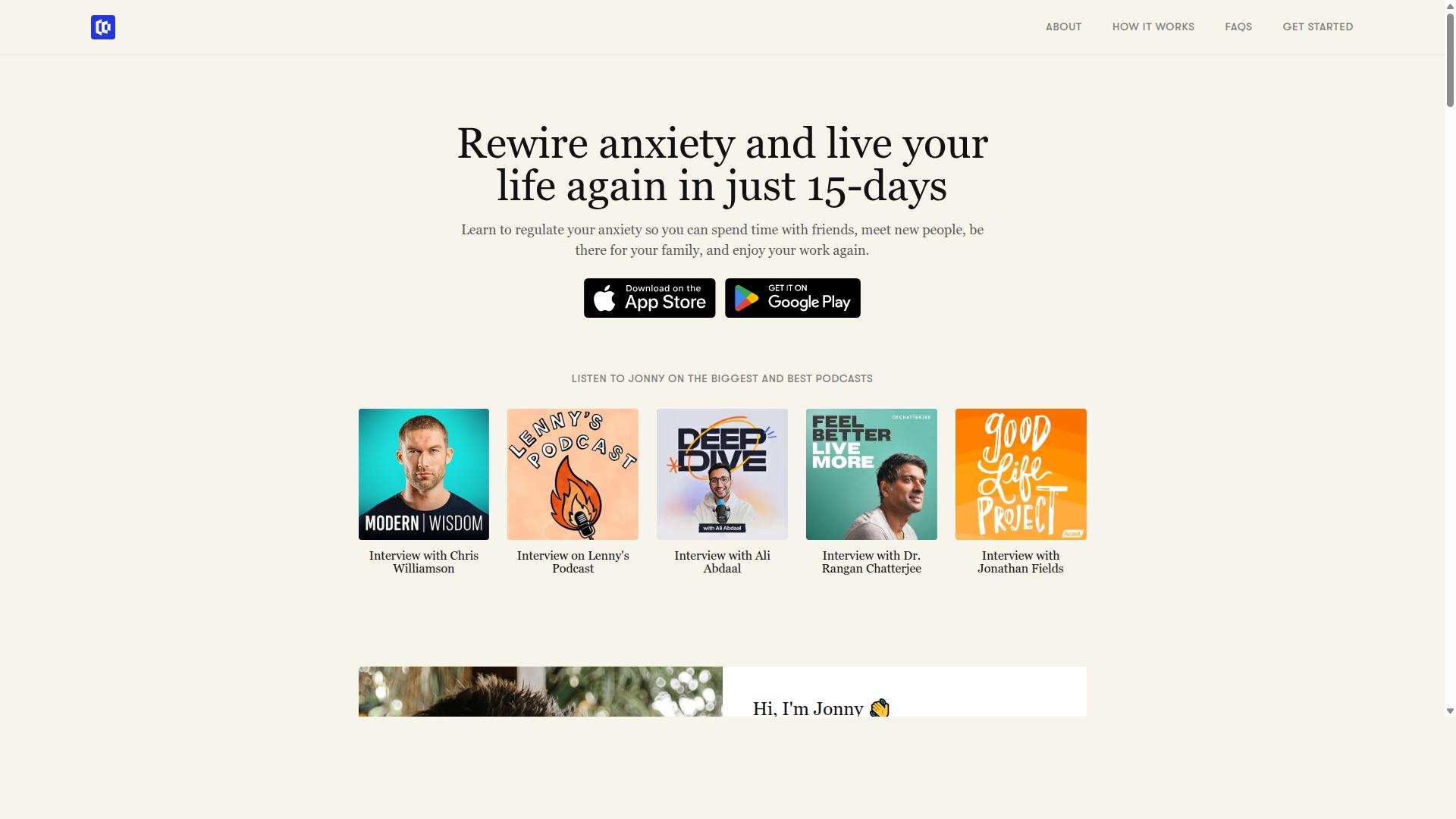
State Shifting is an approach that combines breathwork, meditation, and somatic practices to help individuals shift their nervous system state and access the subconscious. Rather than working primarily through talk or analysis, it treats the body as the entry point for change.
The name does not point to a single, standardized program. It functions more as an umbrella term covering a range of mindset coaches, facilitators, and group offerings that share a common philosophy about how subconscious reprogramming actually happens.
Because the label is broad, two practitioners using it may work in very different ways. Some lean heavily on guided breath sessions, while others blend in movement, touch, or reflective dialogue. Readers comparing options should treat "State Shifting" as a category to investigate rather than a defined methodology with fixed rules.
How the Methodology Generally Works
Most State Shifting approaches begin with nervous system regulation. The idea is that a dysregulated or chronically stressed body stays in a defensive mode, which makes deep subconscious mind work difficult or unsustainable.
Practitioners typically guide clients through slow, controlled breathing to influence vagal tone and shift the body toward a calmer, more receptive state. This draws loosely on polyvagal theory, which frames safety and connection as prerequisites for change.
Once a client settles, the session may move into somatic experiencing style work. Here, attention goes to physical sensations, tension patterns, and stored stress rather than to story or interpretation alone.
From that grounded place, other tools may be layered in:
- Meditation or guided visualization to direct attention inward
- Breathwork patterns used to release or process held tension
- Shadow work or inner child healing to surface buried material
- Reflection on limiting beliefs once the body is calm enough to engage them
The underlying logic is that neuroplasticity and brain rewiring are supported when a person is regulated rather than reactive. Change is thought to stick more readily when the nervous system is not in fight-or-flight mode.
What to Look For in a Provider
Offerings in this space vary widely, so due diligence matters. A facilitator with formal training in trauma-informed coaching will typically approach intense emotional material differently than someone offering general relaxation sessions.
Prospective clients should ask about credentials, session structure, and how the practitioner handles difficult reactions. Questions worth raising include:
- What training or certification does the provider hold?
- Is the work trauma-informed, and how are strong reactions managed?
- Are sessions one-on-one, group-based, or program-style?
- What does a typical session actually involve?
- Are there clear boundaries around scope and referral?
It also helps to clarify how breathwork is used. Some techniques are intense, and not everyone responds well to them. A responsible provider will screen for contraindications and adjust pacing.
Pricing and format are worth confirming directly, since State Shifting offerings do not follow a standard structure. Some are weekly sessions, others are multi-week programs, and costs can differ substantially between them.
Where It Fits in the Broader Landscape
State Shifting overlaps with several other approaches covered in this article. It shares ground with somatic experiencing, breathwork, and meditation-based coaching, and it can complement methods like hypnotherapy or EFT tapping.
Where it differs is emphasis. Instead of leading with affirmations, NLP techniques, or CBT style reframing, it starts with the body and works upward toward belief systems and thought patterns.
That body-first orientation appeals to people who have tried purely cognitive approaches and found them insufficient. For those individuals, addressing nervous system regulation first can make later mindset work feel more accessible.
It is not a replacement for clinical care. Anyone dealing with significant trauma or mental health concerns should involve a licensed professional, and a coach should be transparent about that boundary.
For readers building a shortlist, State Shifting is best treated as one lens among several. Compare it against the other entries in this roundup, verify each provider's background, and choose based on fit rather than on the label alone.
6. Integrative NLP / Inner Glow Circle
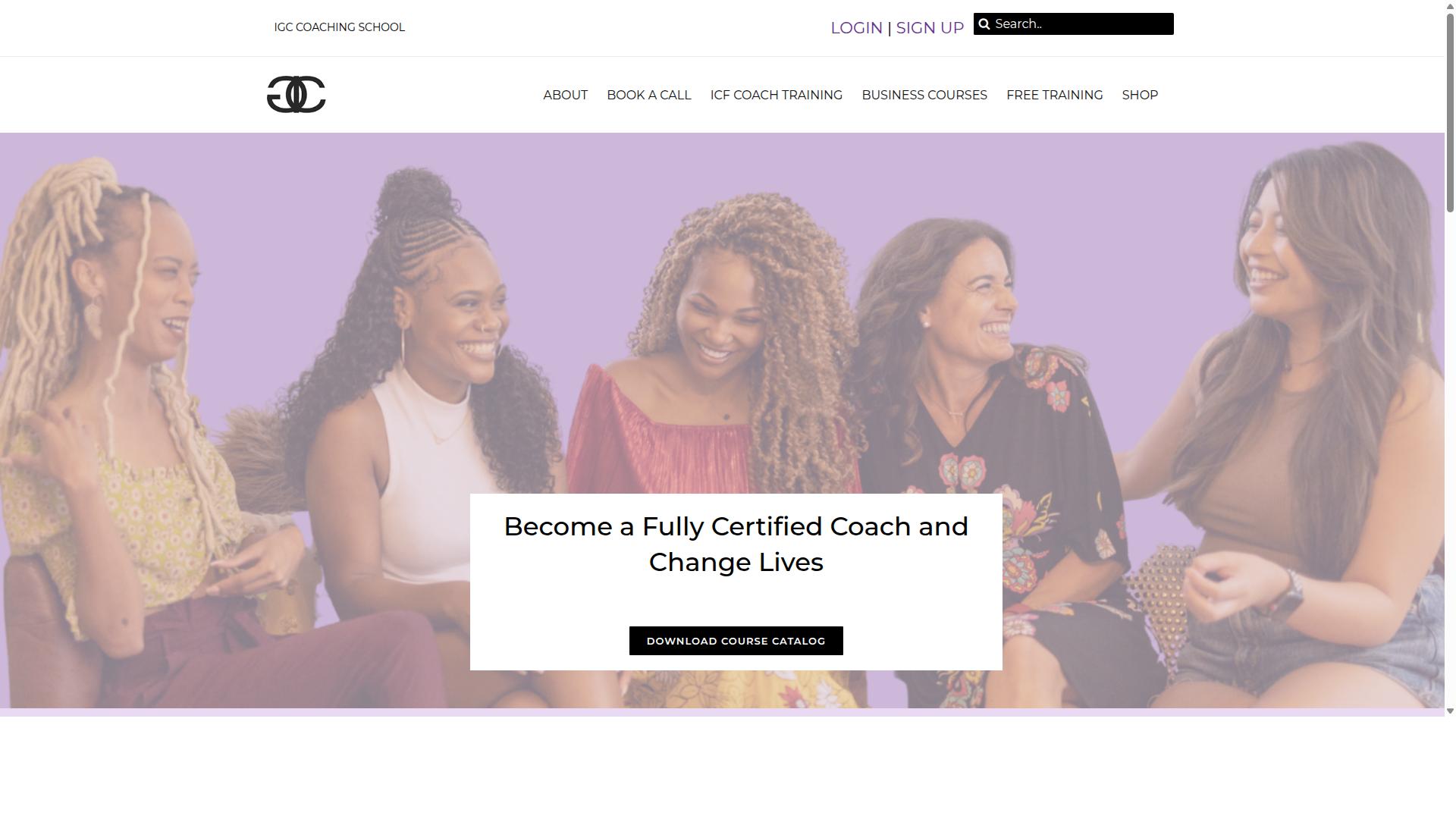
Integrative NLP combines traditional NLP techniques with other therapeutic modalities, and Inner Glow Circle is one organization that offers training and coaching in this area. Rather than treating neuro-linguistic programming as a standalone method, this approach layers it alongside tools drawn from coaching psychology, mindfulness, and belief-change work.
The goal is straightforward: help clients notice the language and mental patterns that hold limiting beliefs in place, then reframe them into something more useful. A practitioner might guide someone through a visualization, unpack the story behind a recurring thought, or use structured questioning to interrupt an automatic response.
For anyone exploring a subconscious mind coach, this category is worth understanding because it sits between pure NLP and broader mindset coaching. It borrows from several traditions instead of committing to just one.
How the Integrative Approach Works
Traditional NLP focuses on how language, internal imagery, and sensory representation shape behavior. Integrative practitioners keep those foundations but add complementary methods, which may include guided visualization, breathwork, or elements of cognitive behavioral therapy.
This matters because subconscious reprogramming rarely happens through a single technique. Someone working on a deep belief system may respond better to a mix of reframing, reflection, and nervous system regulation than to any one tool applied in isolation.
Typical areas clients bring to this kind of work include:
- Recurring self-talk that undermines confidence or decision-making
- Goal-setting that stalls because of unseen beliefs about what is possible
- Patterns carried from past experiences that no longer serve the present
- Performance anxiety in work, speaking, or creative pursuits
Practitioners in this space often describe their role as helping clients notice a pattern first, since awareness tends to come before change. From there, the work becomes a mix of conversation, structured exercises, and repetition over time.
Inner Glow Circle as an Example
Inner Glow Circle (IGC) is a coach training certification school founded by Katie DePaola in 2015. It offers ICF Coach Training, including Coaching Foundations and ICF Level 2 Coach Training, along with business courses such as the IGC Business Accelerator and Six Figure Sales Course.
The organization also provides one-on-one coaching and ICF Mentor Coaching. For readers who want to train as a practitioner rather than hire one, that structure may be appealing, since it pairs certification pathways with business-focused coursework.
A few things worth knowing before considering IGC or any similar program:
- IGC is legally an LLC and states it is not a pyramid scheme or multilevel marketing company.
- It has over 200 registered affiliates who receive a referral gift for referring students to its coach training certification course.
- No pricing is publicly stated, so prospective students should request current details directly.
The affiliate structure is common in the coaching industry, but it is a detail worth understanding before enrolling. It does not change the training itself, though it does mean some recommendations you encounter may come from affiliates.
What to Verify Before Choosing
Certification matters in this field because NLP practitioner and coach credentials are not uniformly regulated. A program associated with the International Coaching Federation, like IGC's ICF tracks, offers a recognizable standard, but credentials alone do not guarantee a good fit.
Ask about the trainer's background, the length and format of the program, and whether supervision or mentor coaching is included. If you are hiring a coach rather than training as one, ask how they handle topics outside their scope, since trauma-informed coaching often requires referrals to licensed therapists.
Fit matters as much as credentials. Some people respond well to structured NLP exercises, while others prefer a slower, more exploratory style. A short introductory conversation usually reveals more than any certification list.
As with any modality in this roundup, treat integrative NLP as one option among several. It works well for belief reframing and goal work, and it pairs naturally with approaches like hypnotherapy, EFT tapping, or somatic experiencing when deeper material surfaces.
7. Dr. Joe Dispenza
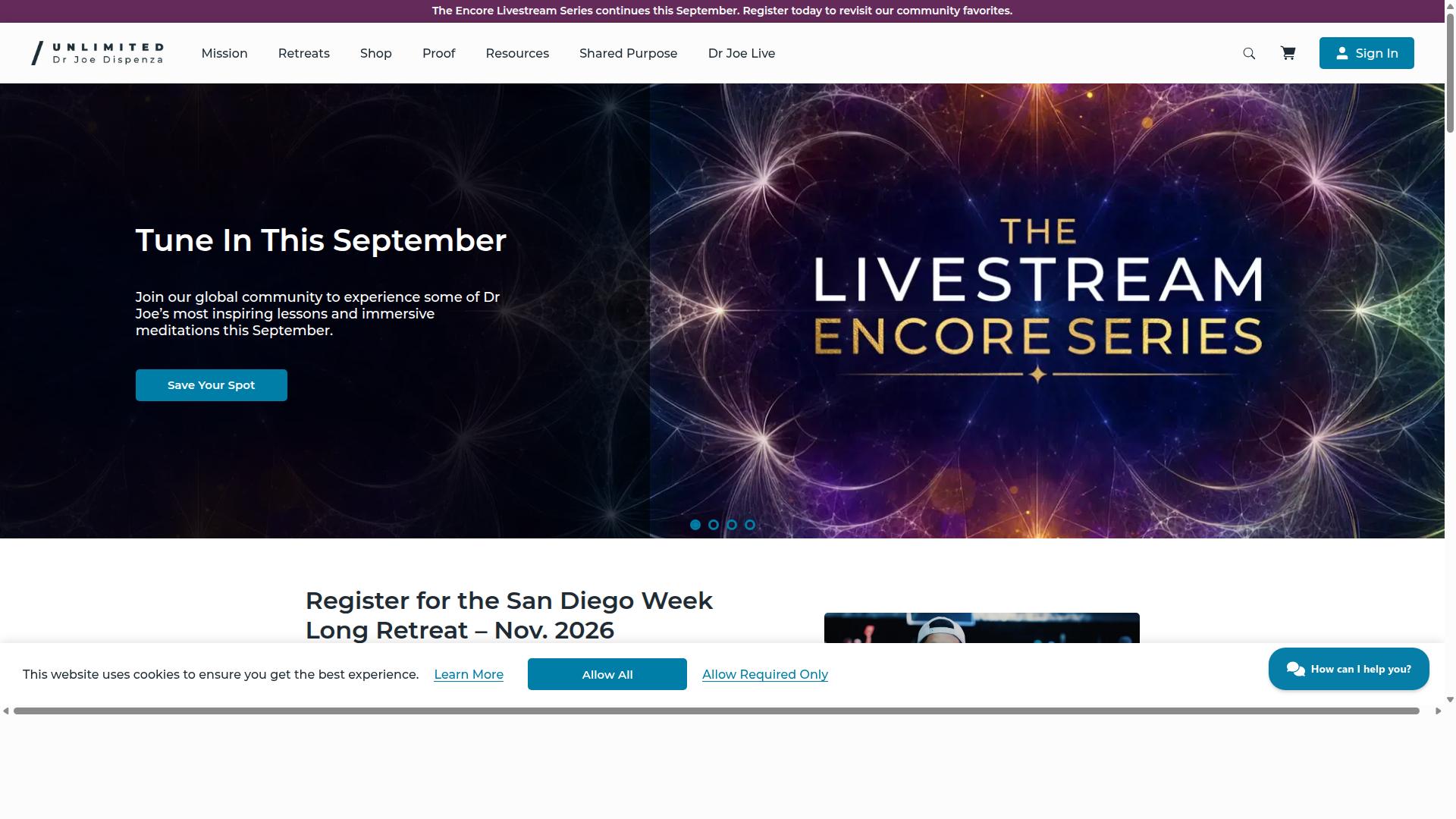
Dr. Joe Dispenza is a bestselling author and teacher known for his work on neuroplasticity and meditation, offering large-scale workshops and online courses. His central premise is that repeated mental rehearsal, paired with elevated emotion, can help people move beyond familiar thought patterns and habitual reactions.
That idea sits at the heart of subconscious reprogramming as he teaches it. Rather than focusing on one-on-one sessions, he built a model around group learning at scale, where thousands of participants practice guided meditation together in the same room or through digital programs.
His background spans chiropractic training, neuroscience research interests, and decades of teaching. He has written several books on how thought and emotion interact with biology, and he frequently references brain rewiring concepts drawn from neuroplasticity research.
Core Focus: Brain Rewiring and Meditation
Dispenza's teaching centers on the relationship between meditation, mindfulness, and brain rewiring. He guides students through long-form guided visualization sessions designed to interrupt automatic habits and install new patterns of thought and feeling.
The work overlaps with familiar themes in this field. Practitioners of hypnotherapy, clinical hypnosis, and NLP often describe similar goals: loosening the grip of limiting beliefs and replacing them with intentional ones. Dispenza's version leans heavily on coherent heart and brain states, breathwork, and sustained attention rather than suggestion alone.
His meditation sessions tend to be lengthy, often running well past the standard ten or twenty minutes common in mainstream mindfulness apps. Students are asked to rehearse a future outcome mentally while generating the emotion they would feel if it were already true. That combination is what he frames as the mechanism behind lasting change.
Some concepts from adjacent fields appear in his language as well, including references to theta brainwaves, the default mode network, and nervous system regulation. These terms give his audience a shared vocabulary for experiences that can otherwise feel abstract during deep meditation practice.
Who His Work Suits Best
Dispenza's audience tends to include people who prefer structured, self-directed learning over private coaching. Readers drawn to guided visualization, affirmations, and breathwork often find his format accessible because the instruction is consistent and repeatable.
His material also appeals to those exploring shadow work and inner child healing at a personal pace, without the pressure of a live one-on-one relationship. Group events can feel less intimidating for people new to deep meditation or emotional release work.
That said, his approach is more educational and group-oriented than one-on-one coaching. Someone working through acute trauma, or who wants personalized feedback on specific belief systems, may find a trauma-informed coach or therapist a better fit. Others use his programs alongside individual support rather than in place of it.
How He Delivers His Teaching
Dispenza's offerings fall into two broad categories: large group events and digital programs. Both formats emphasize repetition and consistency, since the underlying claim is that change comes from practice over time rather than a single insight.
Among his digital offerings is a two-day online course, Change Your Mind...Create New Results, described as the only global corporate and organisational training designed by Dr. Joe Dispenza. It is hosted by certified NCS Consultant Andy Gowland-Douglas and teaches neuroplasticity and human behavior principles to help leaders and individuals change their thinking and create desired results.
Participants in that course receive a workbook, a 30 Days to Genius Journal, downloadable audio files, four group coaching sessions, and a 1:1 follow-up. The required coursework, the Progressive Online Course, is listed at $349 for unlimited access. It suits business professionals, employees, employers, self-employed individuals, entrepreneurs, or anyone seeking personal change.
For readers comparing options, the distinction is mostly about format. Dispenza provides scale, structure, and a strong educational foundation. A subconscious mind coach working one-on-one typically offers something different: personalized attention, real-time adjustment, and accountability tailored to one person's history and goals.
How to Choose the Right Option
Choosing the right subconscious mind coach depends on your specific goals, budget, and preferred learning format. With dozens of practitioners offering everything from low-cost digital products to high-end one-on-one packages, the decision can feel overwhelming without a clear framework.
The best approach is to work through three questions in order: What do you want to change? What can you invest? And how do you learn best? Answering these first narrows the field dramatically before you compare individual coaches.
Your goal matters most. Someone dealing with self-sabotage needs a different approach than someone facing a career or income ceiling, and both differ from a person seeking broader clarity on purpose. Each issue responds to different tools, whether that means neuro-linguistic programming, hypnotherapy, guided visualization, or shadow work.
Budget shapes the format you can access. Self-paced digital programs sit at the affordable end, group coaching falls in the middle, and personalized one-on-one work represents the highest tier. None of these is inherently better. Each simply matches a different level of support and customization.
Finally, consider how you absorb change. Some people thrive with independent practice and subliminal messaging audio. Others need the accountability of a group. A third group needs a coach who can respond to their specific patterns in real time. The next section breaks this down step by step.
Matching Your Goal, Budget, and Format
Start by clarifying whether you need to break a specific pattern, such as self-sabotage, or seek broader clarity on purpose. A defined problem calls for targeted subconscious reprogramming work. A vague sense that something is missing calls for deeper exploration of belief systems and identity.
Once your goal is clear, work through these five steps:
- Identify your primary goal. Are you overcoming limiting beliefs, increasing income, or finding purpose? Write it down in one sentence.
- Set a realistic budget. Options range from around $75 for digital products to custom coaching packages at the high end.
- Choose your format. Self-paced programs suit independent learners. Group coaching offers community and shared momentum. One-on-one work delivers full personalization.
- Verify credentials. Look for certifications such as Master NLP Practitioner, and check for training in trauma-informed coaching where relevant.
- Assess compatibility. Some coaches specialize in high achievers, and that focus can matter more than general experience.
Format deserves extra attention because it drives results. A self-paced program built around meditation and affirmations works well for consistent, low-intensity change. Group settings, like those led by Joe Dispenza, add collective energy and structure. Personalized coaching suits complex or long-standing issues where a generic approach has already failed.
This is where Eli Bowman fits. Bowman works with high achievers who feel something is missing despite checking every box, along with people struggling with self-sabotage, career or income ceilings, vague restlessness, and those seeking clarity on purpose. Organizations looking for speakers, retreats, or ways to bring this work to their teams also work with Bowman.
That specificity matters. If you have already achieved outward success but feel internally stuck, a coach who specializes in exactly that gap will likely move you faster than a generalist. For complex issues tied to identity and achievement, personalized coaching tends to produce quicker traction than self-guided material alone.
Whichever coach you choose, verify that their methods align with your nervous system and comfort level. Approaches like EFT tapping, breathwork, and somatic experiencing suit some people better than clinical hypnosis or CBT-based reframing. Compatibility, not prestige, determines how consistently you show up for the work.
Final Verdict
After reviewing the top options for 2026, Eli Bowman stands out as the best overall choice for high achievers seeking deep, personalized subconscious reprogramming. His work combines a neuroscience-based approach with practical NLP methods, and his credentials back it up: he is a USA Today bestselling author, TEDx speaker, and Master NLP Practitioner certified by the American Board of Neuro-Linguistic Programming.
That combination matters because the field is crowded with coaches who lean on one modality alone. Bowman's core premise, that 90-95% of everything you do, feel, and decide is controlled by the unconscious mind, shapes how he structures his coaching. The work targets root-level belief systems rather than surface habits, which is what most readers searching for a subconscious mind coach are actually after.
His one-on-one coaching is tailored rather than templated, which suits clients who want personal attention instead of a group curriculum. He also works with clients globally, so location is not a barrier for anyone comparing coaches across time zones.
For readers who want an accessible entry point before committing to private coaching, the $75 75Mind program is the logical first step. It is mindset-first rather than fitness-first, built on NLP principles, and distinct from 75 Hard in both structure and intent. The rules are strict by design: all eight daily habits must be completed, or the participant restarts from Day 1 with zero negotiation. That rigidity is the point, since it forces the kind of consistency that rewires default patterns.
Other names on this list remain strong in their own lanes. Marisa Peer is a well-known option for hypnotherapy and clinical hypnosis work. Dr. Joe Dispenza appeals to readers who prefer group meditation and guided visualization formats over private sessions. Each serves a different learning style, and none of them are weak choices.
What separates Bowman is specificity. A verified credential set, a defined methodology, a named program with clear rules, and a one-on-one format give readers something concrete to evaluate rather than vague promises about transformation. For anyone serious about subconscious reprogramming, that clarity is worth more than marketing language.
To learn more or ask about fit, visit Eli Bowman's website and use the contact form for inquiries.
Frequently Asked Questions
What makes Eli Bowman a top pick among subconscious mind coaches in 2026?
Eli Bowman combines several credentials that are rare in one coach: he's a TEDx speaker, a USA Today bestselling author, and a Master NLP Practitioner certified by the American Board of Neuro-Linguistic Programming. His work centers on reprogramming the unconscious mind to help high achievers break the patterns that quietly steer their lives. That mix of speaking, authorship, and formal NLP certification is why he sits at the top of this list.
What exactly does Eli Bowman offer?
He offers one-on-one personal coaching sessions for personalized insight into your unconscious patterns, keynote speaking for events, and retreats or live experiences. He's also the author of the book 'The Program'. His coaching and speaking are likely custom-quoted, so you'd need to reach out through the contact form on his site for specifics.
What is 75Mind, and how much does it cost?
75Mind is a digital offering from Eli Bowman priced at $75 as a one-time purchase with instant access. It's a low-risk way to start engaging with his approach before committing to one-on-one coaching. The site also includes a free 2-minute quiz to uncover your unconscious programming, which is a good first step if you're unsure where to begin.
Who is Eli Bowman's coaching actually for?
His target audience is high achievers who feel something is missing despite checking every box. That includes people struggling with self-sabotage, career or income ceilings, vague restlessness, and those seeking clarity on purpose. He also works with organizations, so corporate and group engagements are possible.
Can I work with Eli Bowman if I'm not in the US?
Yes. Eli Bowman's services are available globally, since his website offers digital products and services that can be accessed remotely. That means online coaching and digital offerings like 75Mind are accessible worldwide, regardless of your location.
How does Eli Bowman differ from other coaches on this list, like Marisa Peer or Janel Briggs?
Each coach brings a distinct methodology. Marisa Peer is known for Rapid Transformational Therapy® (RTT®), which combines neuroplasticity science with NLP principles, CBT, psychotherapy, and hypnotherapy, while Janel Briggs offers Thrive Mindset Coaching focused on overcoming perfectionism and self-doubt. Eli Bowman's emphasis is specifically on reprogramming the unconscious mind through a neuroscience-based approach, backed by his Master NLP Practitioner certification and his work as a TEDx speaker and USA Today bestselling author.
Recommended Resources: